DatriumCrowdChat

Liberate IT from Complexity
Liberate IT from complexity and move at the speed of today's on-demand economy. Datrium's platform provides IT instant outcomes with unprecedented performance, agility and efficiency by converging the data lifecycle across multiple clouds to a single secure platform.
Peter Burris
As your business takes steps to unify your data lifecycle, how are you consolidating your data management practices? https://www.crowdchat.net/s/85tyd
https://www.crowdchat.net/s/85tyd

Greg Kleiman
In a recent survey, we found the majority of IT professionals wanted to converge their primary and backup. Here's how they can do it. https://www.datrium.com/resources/converging-prima...
Sazzala Reddy
unifying the data lifecycle is the only way forward in the multi-cloud world. Otherwise, we are going to be land-locked.
bill crimmel
Less complexity leads to greater success and WINS when comes to the needs of "insta-data". Simplicity for the win.
jameskobielus
Consolidating data management practices usually means consolidating data management teams. But you only consolidate those practices if data ownership is at a higher level in the org than particular business units.
Greg Kleiman
More autonomous data management helps IT free up to focus on more strategic projects to help their business
Bryan Bond
one platform for all data needs, by the way, I don't manage storage anymore, but "data" that is another story and next on the list. Now that I can easily manage where it is can we start talking about how much there is and how we can reduce that?
Brian Biles
If you consolidate your practices around more silos of data product types, you can't really improve how you staff your practices. That comes from fundamental system rethinking, integration and automation
Bryan Bond
Anyone here have "just the right amount" of IT staff or "too many", or are we all short staffed with growing expectations?
Tushar Agrawal
I think that staff is flat and to-do-list is increasing, right? what about cloud, devops, dataops, analytics, and making everything work flawlessly!
Peter Burris
Most of our clients indicate their "short-skilled." Trying to better match staff to evolving tasks. Running into roadblocks. However, even then, most report they've over pivoted on staff reductions.
Kevin Smith, MBA, ITIL, GISF
neither. The problem is that number of "Hats" we have to wear on a daily basis. Datrium removes some of those hats and allows us to focus on priorities
Dave Vellante
shifting resources from traditional IT staff to devs - programmable infrastructure
Bryan Bond
@plburris exactly, all the more reason to automate mundane task and train up on more complicated or long term plans, had to get FTEs back once you let them go
HAVE A PLAN FOR WHEN YOU MAKE IT SO EASY A CAVEMAN CAN DO IT lest they take all your cavemen away
stevegreenberg
I see pretty much universally short staffing situations, this is driving companies to look for innovative products over the older "safe" options more and more
Tushar Agrawal
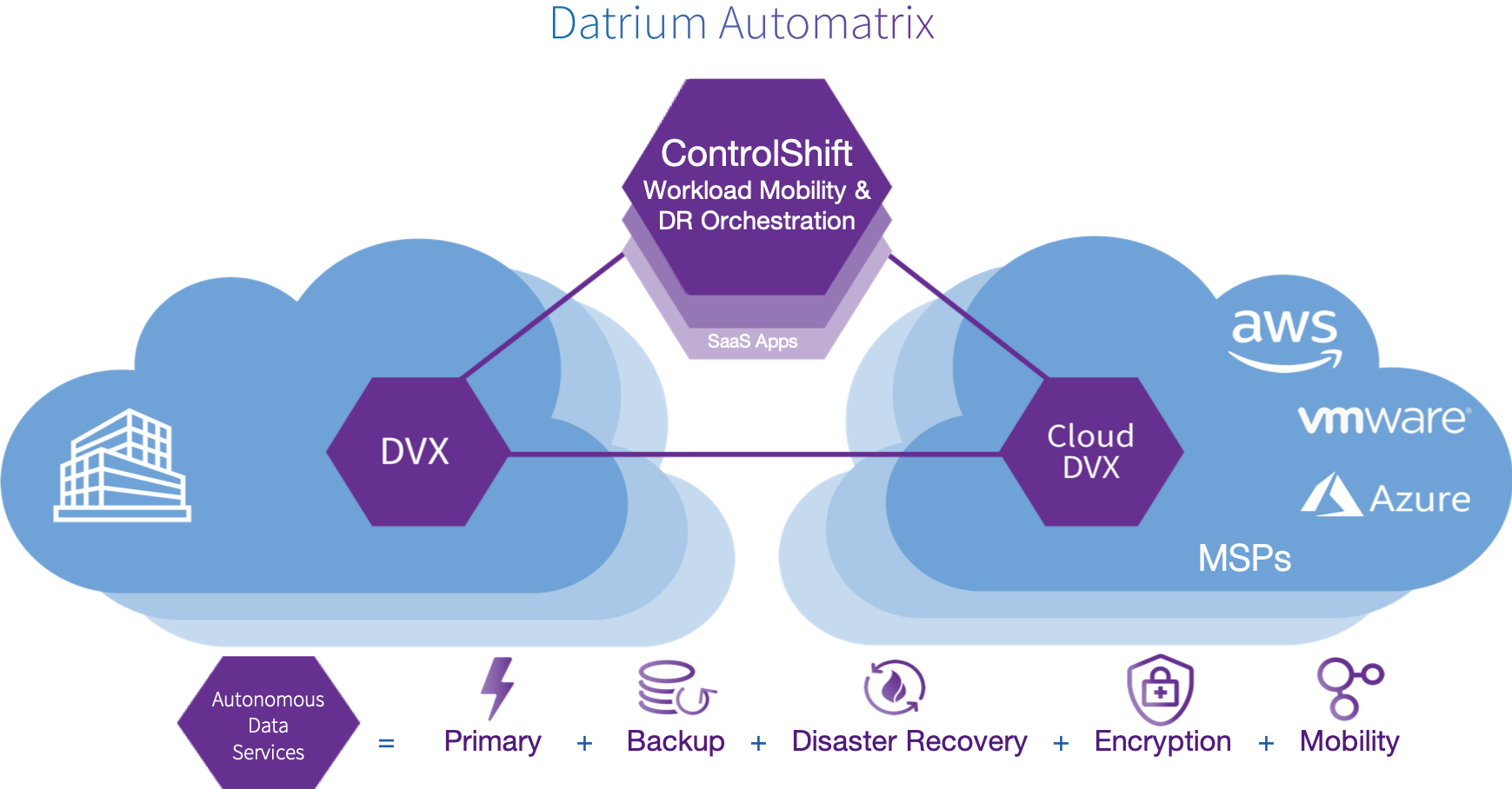
@plburris @andreleibovici this is one of the answers. An autonomous matrix of all key data services converged in a single software, which can work in any cloud and allow for a single pane of glass control. https://www.crowdchat.net/s/15tys

(edited)

https://www.crowdchat.net/s/15tys

Peter Burris
How are your business leaders responding to the need for simpler data infrastructure in your enterprise? https://www.crowdchat.net/s/05txs
https://www.crowdchat.net/s/05txs

Sazzala Reddy
CIOs are thinking "cloud-first". It means different things for different folks. But, what they are saying is that they want to move fast and provide instant outcomes for the business.
bill crimmel
It's easier to explain, define and prove when it comes to both capital and operational costs. This leads to more approvals.
stevegreenberg
business leaders seem more frustrated than ever to have such great productivity tools available but finding it takes too long to deploy and leverage them. Support infrastructure needs to be simpler, @datrium really helps here
Greg Kleiman
CxOs usually go right to the bottom line, so here's a summary of how 10 Datrium customers achieved a 5 month ROI payback https://go.datrium.com/AR-2018-09-21-IDCAnalystRep...
Bryan Bond
here, they are pleased as the diagram showing that infra keeps getting less complicated and more efficient, fewer moving parts, greater cohesion among the parts we do have
Dave Vellante
the trend is clear - there's no business value in provisioning LUNs & the like - business leaders are on board for the most part...or they're burning away valuable resources
Sazzala Reddy
Any new technology that improves speed of business (at a reasonable price point) is going to be grabbed up rapidly. That is what should be driving all IT vendors....enabling IT to move at light speed.
Greg Kleiman
Do more with less is how many business leaders react
Brian Biles
See the Datrium survey from this morning -- IT folks would prefer converged primary and backup 10:1 https://www.datrium.com/press-releases/state-of-it...
https://www.datrium.com/press-releases/state-of-it-transformation-report-2019/
New Research Reveals 86% of Companies Plan to Increase IT Transformation Investment Over Next Five Years -
SUNNYVALE, Calif. – May 15, 2019 – Datrium, pioneer of the secure multicloud platform for the resilient enterprise, today announced the findings of its industry report on the State of IT Transformation, which dives into the critical data center chall...
Sazzala Reddy
All the new innovations that help IT happen to come from new upstarts, and not from big blue companies. It is not that they are not trying, but it is just hard to move a big ship.
jameskobielus
Business leaders are in favor of anything that cuts costs and improves results. If simplifying the data infrastructure achieves either or both of those objectives, they're usually gung-ho.
Peter Burris
What types of friction are you experiencing as you try to weave together multiple data services? https://www.crowdchat.net/s/65tx4
https://www.crowdchat.net/s/65tx4

Sazzala Reddy
Firstly, there is a lot of risk weaving together a bunch of different products together. Modern tech is supposed to simplify and reduce the number of things we need weave together.
bill crimmel
single pane of glass to manage process, automation, auditing and operations. data is everywhere and people want it now, fast and reliable.
Greg Kleiman
we see customers struggle to work across 5 data functions. Here is a blog that explains the problem and how you can solve it https://www.datrium.com/blog/the-future-of-it-auto...
Bryan Bond
lack of true portability and transparency
stevegreenberg
the problem is that everything IT shops need to do requires a separate product with it's own recurring costs, training and maintenance requirements. What is needed are consolidated platforms that treat all aspects of data as one framework, @Datrium is very unique here
Brian Biles
The worst is DR orchestration - there can be multiple vendors involved, with different software releases, management consoles, etc. - so many deployers find it fails when they test it. It's a whole-datacenter problem.
David Floyer
Significant friction of different services for different data in different locations. Usual choice is an integrated data management & to move the data to one place. This is costly and slow. Time value and context is lost in transmission. A hybrid cloud approach is best.
Tushar Agrawal
the biggest friction of multiple data silos is time. takes too long to backup and restore. takes too long to use cloud. takes too long to recover from disaster. while my customer demands outcome now
Peter Burris
@sazzala We've learned the risk of "weaving" tech together in multiple domains. Think of how complex analytics tool chains are. Baking weak interfaces into data services processes will kill performance and security.
Bryan Bond
must not be using the right tools, we moved away from things like SRM years ago for that reason
Sazzala Reddy
The big friction going forward will be that your data will become land-locked. The many different products managing your data are going to be drag on mobility. We all want to leverage the multi-cloud, but the friction between products is going to an albatross.
Dave Vellante
many complain about "API creep" and the increasing complexity of the data pipeline...it's often complicated, confusing and expensive to manage...
Greg Kleiman
many software development teams like Datrium can reduce friction with fast cloning; here's how https://www.datrium.com/blog/with-fast-clone-tech-...
Tushar Agrawal
the second biggest friction is innovation. i can no longer access all my data. my primary has some piece of it. my secondary some piece of it. cloud has other pieces. i can't figure out what is where and how to use it.
Tushar Agrawal
And, security and data integrity checks across these multiple silos is hard to establish
jameskobielus
A chief source of friction when weaving together multiple data services is usually the need to harmonize all the schemas, aggregate and cleanse the data, and converge it all in a data lake for unified DataOps. Addressing this involves investment in data consolidation.
Peter Burris
What use cases are driving your approach to simplifying infrastructure generally, and data infrastructure specifically? https://www.crowdchat.net/s/25two
https://www.crowdchat.net/s/25two

Greg Kleiman
many customers I speak with start with test dev and VDI, then move to web apps and databases that drive their business
stevegreenberg
the growing prevalence of Virtual Desktops is a big one, many organizations are rapidly expanding virtualize End User desktops and cant wait around for the traditional storage allocation processes to do this
Brian Biles
Most IT folks I talk to are trying to drive IT transformation generally - trying to get away from legacy infrastructure admin issues so they can focus on improving their customer experience
Sazzala Reddy
Every consumer is demanding instant gratification from the businesses they interact with. What is fast today, will be slow tomorrow. So, every business needs to adopt to this new instant economy model. To do that, we need infrastructure to deliver instant outcomes.
Tushar Agrawal
Data protection and recovery is one - human error, ransomware can happen. How can you make it a non-event?
David Floyer
Increasing amounts of distributed data in public clouds, on premises, in SaaS clouds, and at the Edge.
Kevin Smith, MBA, ITIL, GISF
Simplicity. Want something that is simple and easy with low to no work. I want to be able to sleep at night and know that my data is protected
stevegreenberg
and then ransomware! A platform that can instantly recover an entire infrastructure to a known good state is invaluable
Greg Kleiman
here's a recent report that talks about the status of IT transformation https://cdna.datrium.com/wp-content/uploads/2019/0...
https://cdna.datrium.com/wp-content/uploads/2019/05/14173650/Datrium-Survey-Report-2019.pdf
Tushar Agrawal
Test/dev and the speed of it is another one. How long should a developer wait before the production data can be made available to them for their use. Should be instant.
Tushar Agrawal
Another use case is improving workload performance. Nothing is fast enough. As Bezos would say, a customer is never going to say I don't want it faster. So, how fast can it go?
Bryan Bond
my users need more, faster and more often, by simplifying and automating we are actually seeing LESS total demand for systems (users are willing to give up old systems if it is quick and easy to get new ones)
Stuart Miniman
Data is everywhere - (multi) cloud is forcing users to rethink everything
jameskobielus
The chief use case driving data infrastructure simplification is 360-degree customer view for multichannel target marketing, personalization, and experience management. That calls for convergence of OLTP, OLAP, DW, and machine learning within common end-to-end infra.
Kevin Smith, MBA, ITIL, GISF
@tushar_agr our CAD team love the performance of not having to wait to render anymore
Tushar Agrawal
Lastly how about maintenance and optimizations. How can you shift your workloads to another site reliably, do what you need to do and bring them back. And, only pay for the other site for the duration of the event.
Dave Vellante
all our IT is in the cloud - so everything from test/dev, web, transactional data, analytics, video editing...everything
Peter Burris
Now THAT'S a great use case? How is this translating into business outcomes?