A4: Starting at the top. Leadership has to fully commit to AI and see this as an enterprise change management challenge and bring along the broader organization. Currently it's the domain of a few in R&D labs.
A4. Companies need to develop standards and tools for identifying privacy violations and bias, ensure accuracy and provide explainability. Data quality and governance will remain relevant
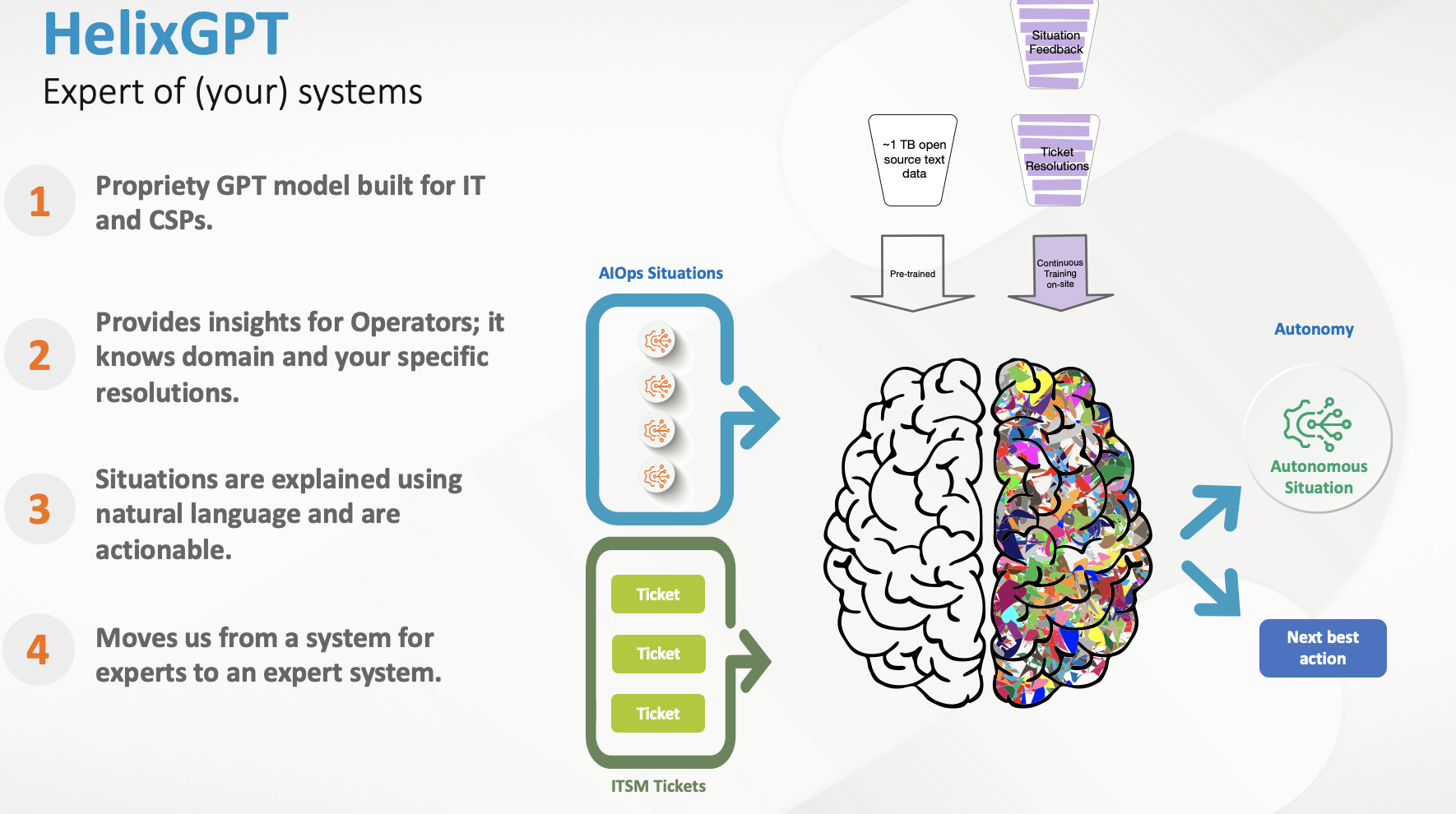
Explainability is indeed a huge issue, especially for adoption. That’s why we had to build a knowledge graph based AI architecture to reason about causality as opposed to closed, non-attributable pure ANNs.
A4. When addressing AI challenges, a disciplined approach is essential. Early in the project it is essential from a perspective of getting the right data sets together, doing the data wrangling, and being able to build the models with the associated exploratory Data
A4. It takes time, but a before & after visual helps. From an org’s perspective, seeing how problems are solved more quickly or that a help desk is taking fewer calls is key. The ability to measure the effectiveness of #AI (or anything for that matter) can’t be beat
A4. o Once you start scoping up, then the data engineers become even more important especially when you have demanding real time needs, audacious throughput, and the dynamic scale up and down of large parallel processing environments as most of our clients do.
A3 Cost is only one of the problems. Keeping up to date with the latest innovations may be an even bigger problem, not to mention ethics, bias, transparency…
Bit-rot is indeed a concern. We believe a hierarchical training approach helps. That’s why we tiered our LLM with additional ANN layers, so that we can train HelixGPT with tribal knowledge, without having to teach it the basics of human language generation.
A3. That’s why we focus on them early and repeatedly through our projects. It’s the differentiator to getting our projects into production and generating value for our clients.
A3. One of the biggest challenges is knowing how to choose solutions that will give you a good return on investment. Some companies have #AI solutions in search of problems, and unsatisfactory results. (1/2)
@trentf_CA I think we've seen a shift from experimentation in the lab to use in the front and middle office. Evidence: there’s increasing demand for software engineers to integrate and deploy AI-powered experiences and less pressing demand for data science resources.
A3: Having clear vision for adopting AI across the enterprise, and translating it to a cohesive implementation plan continue to be the biggest challenges. Cost will become a challenge if the strategy and plan are flawed leading to lack of ROI and cost overrun.
A3. Cost is not the big problem, value realization is the big problem. Figuring out the long-term revenue potential or the near-term cost savings associated with implementations is the problem.

 #eWeekChat
 4 years ago